3DPrinting
Functional prototypes and end-use parts in as little as 3 days. MJF, SLS, FDM, SLA, and DMLS across five additive technologies.
Engineer reviewed quote
Free instant quote, no email
Want to learn more? Read on.
Design for Additive
3D Printing DFAM
Thickness
Thin walls are the Achilles heel of 3D printing. Each tech is different, but maintaining at least 1mm will keep you golden in all of them. Below 1mm things get fragile.
Lightweight
Thickness is no guarantee of robustness. In fact, removing material and lightweighting parts via sparse fill or topology optimization can improve strength and lower your cost.
Print Orientation
No matter the technology, identifying a proper print orientation is key for accuracy, strength, and finish.
Feature Size
Knife edges, through holes, and features under 1mm will differ from your CAD model. If that precision is essential, we'll post-process accordingly.
Technology Breakdown

SLS & MJF
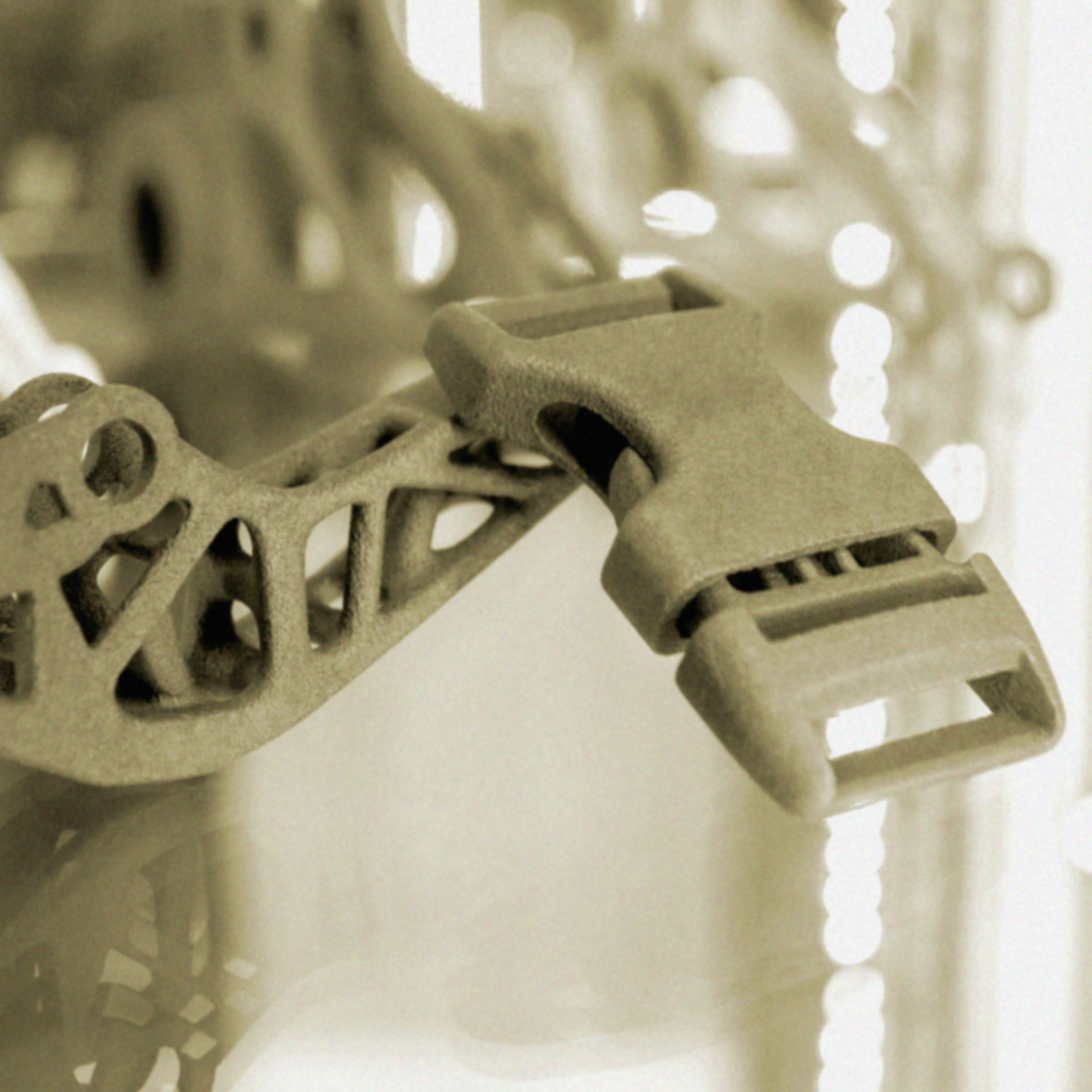
SLS and MJF are not only ideal for prototyping but they also offer a cost-effective alternative to injection molding for small batch runs without the hefty upfront cost of tooling. Our powder-base technologies help you create high-quality components quickly, allowing you to test your product and scale with confidence.
- Materials
- PA12, PA11, PA12+30GF, PP, TPU88A
- Accuracy
- ±0.005" per inch
- Machines
- 33 units
- No support structures, complex geometry without penalty
- Isotropic mechanical properties
- Glass-filled PA12 for structural applications
- TPU88A for flexible, rubber-like parts

FDM
Fused Deposition Modeling is the fan favorite additive method, offering the widest range of material options for everything from functional prototypes to end-use parts. With its large build tray, durable material, and proven reliability, FDM technology is the perfect fit for many different applications.
- Materials
- PLA, ABS, TPU 95A, PC, PC-ABS, ULTEM
- Accuracy
- ±0.005" per inch
- Machines
- 8 units
- Widest material selection including high-temp ULTEM
- Large build volumes up to 36" × 24" × 36"
- Functional prototypes in real thermoplastics
- Low cost per part for simple geometries

SLA
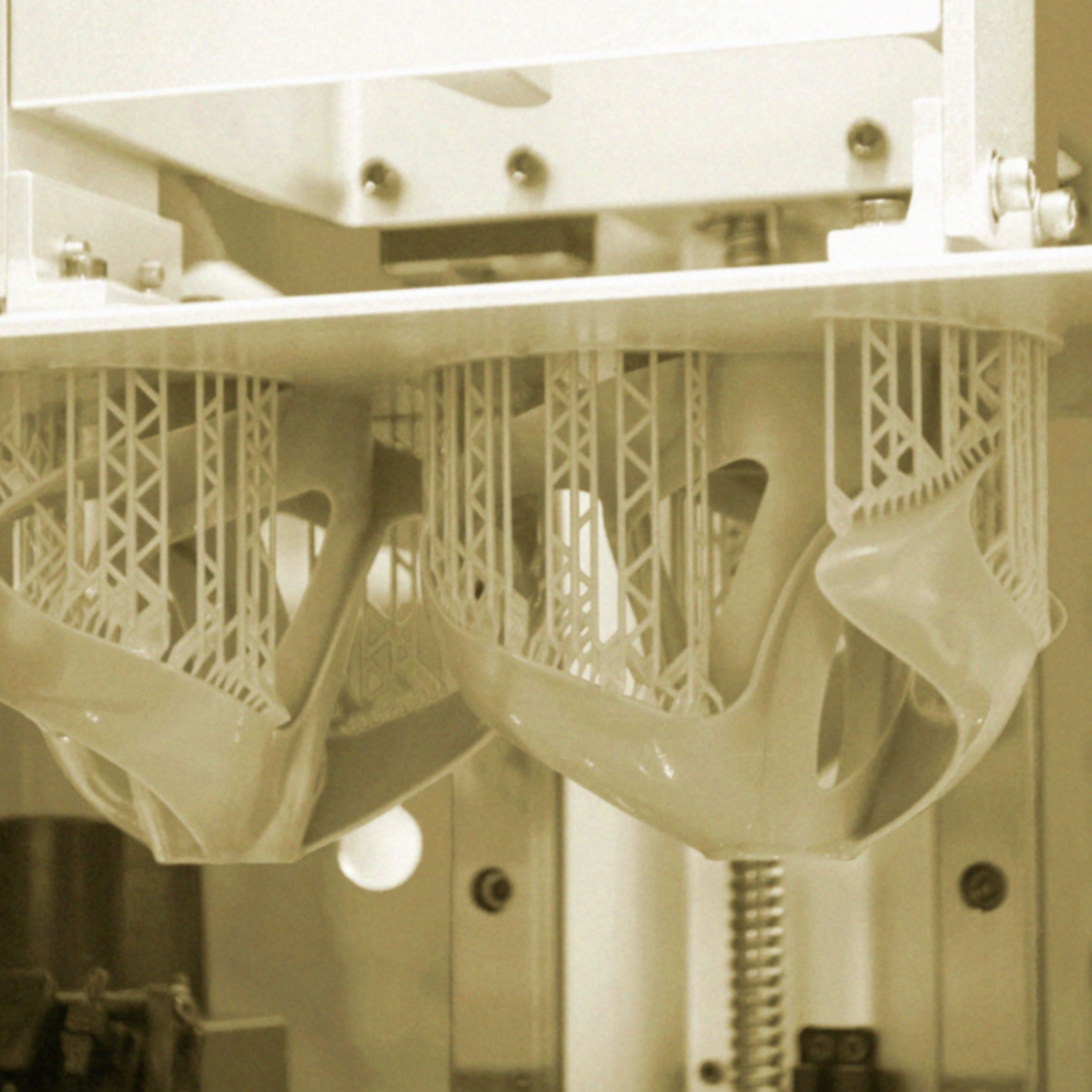
UV laser cures liquid photopolymer layer by layer. Smooth surfaces and fine detail down to 25 microns. Best for cosmetic prototypes, master patterns for urethane casting, and fit-check assemblies.
- Materials
- ABS-like photopolymers
- Accuracy
- ±0.002" per inch
- Machines
- 90 units (SLA 850 + MSLA 300)
- Finest surface finish of any additive process
- Excellent for cosmetic and presentation models
- Master patterns for silicone mold tooling
- Transparent and flexible resin options
Deep Dive
FAQs
No minimum. We print single prototypes through runs of thousands. There's no tooling, so there's no setup cost pushing you toward a minimum order.
SLA for cosmetic finish and fine detail. SLS/MJF for functional nylon parts with complex geometry. FDM for large parts or high-temp thermoplastics like ULTEM. DMLS for metal. We look at your geometry, material needs, and end use to recommend the right process.
STEP, IGES, STL, and 3MF. We prefer STEP or IGES for quoting since STL files don't carry dimensional metadata. Native CAD (SolidWorks, Creo, NX) accepted on request.
Yes. MJF PA12+30GF and FDM ULTEM parts are running in aerospace and automotive production. SLS PA12 is standard for production jigs, fixtures, and end-use parts. We match process and material to your mechanical and environmental needs.
Post-machining for tight-tolerance features, dye coloring, split-and-glue for oversized assemblies, and heat-stake assembly for multi-part builds. Vapor smoothing and media blasting also available.
As fast as 3 days for SLA and FDM. SLS and MJF typically ship in 5 business days. DMLS metal parts in 7–10 days. Expedited options available, contact us with your timeline.
36" × 24" × 36" on our largest FDM machines. SLA is 33" × 20" × 16". For parts bigger than the build envelope, we section and bond with structural adhesives.
Yes. Every project gets a manufacturability review, wall thickness, overhang angles, support strategy, and print orientation. We flag anything that could cause print failures or post-processing headaches before we start.